
Every session brokered and audited.
Connect to any host — Linux over SSH or Windows over RDP — through an audited access broker. Access is injected just-in-time, decrypted in memory for the authorized session only, and written to a complete audit trail.
the problem
Private keys scattered across laptops are impossible to rotate, attribute or revoke. When someone leaves — or a laptop is lost — you're guessing at blast radius.
What it does
- Brokered connections
- Sessions run through the broker rather than from standing keys on a device. Credentials are injected just-in-time and torn down when the session ends.
- Just-in-time elevation
- Request elevated access for a window that expires on its own — no permanent grants accumulating in the dark.
- SSH, SFTP and RDP anywhere
- Open a Linux terminal, transfer files, or reach a Windows host over RDP from the browser or the desktop app — all against the same brokered connections.
- Session recording
- Optionally record sessions on sensitive systems for compliance, tied to the same audit trail as everything else.
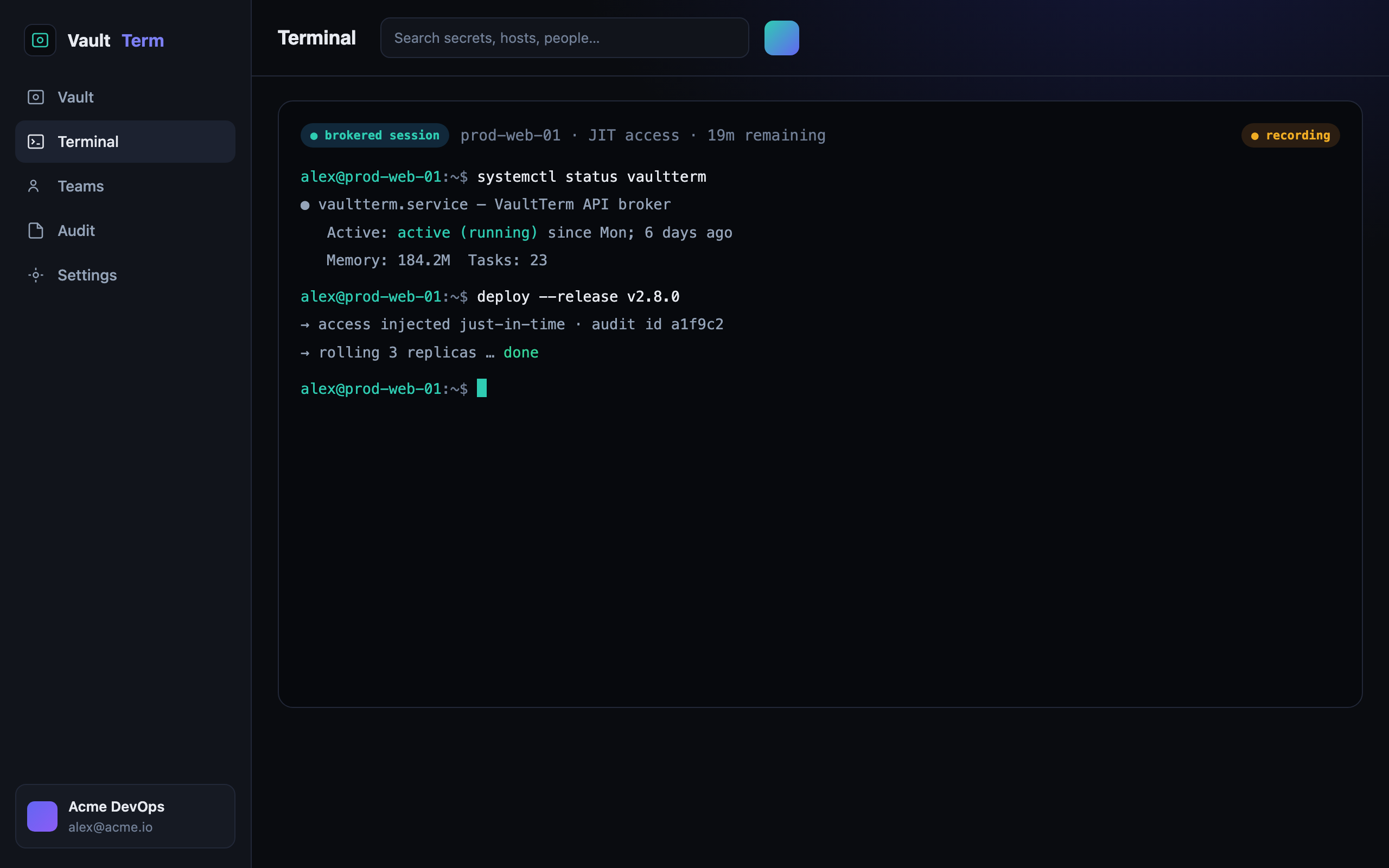
- No standing keys on laptops
- Just-in-time elevation that expires automatically
- SSH, SFTP and RDP from the browser or desktop
- Optional session recording for compliance
how we back it up
No hand-waving on security
faq --list
Terminal, SSH & RDP broker — questions
Where do the SSH keys live?
In the vault, under envelope encryption — not on the connecting device. The broker injects access for the session and removes it afterwards, so there are no standing keys to lose or rotate by hand.
Can I still use it from a normal terminal?
Yes. You get SSH and SFTP from the browser and the desktop app, all against the same brokered connections so the audit trail is consistent.
Can I reach Windows hosts?
Yes — VaultTerm brokers RDP to Windows hosts on Enterprise, with the RDP password pulled from the vault (never typed) and the session on the same audit trail as SSH.
What does just-in-time access mean here?
Instead of permanent access, you request a time-boxed grant. It expires automatically, so access doesn't quietly pile up over months.